.png)
What Sets Premium Recessed Lighting Apart from Builder Grade

Walk into a home with basic ceiling fixtures, and you may have enough light to see everything clearly. But walk into the same space with a thoughtfully designed lighting plan, and the experience can feel completely different.
Architectural details become more noticeable. Artwork stands out. Countertops are illuminated where you actually need them. Living spaces feel warmer in the evening. And the lighting itself doesn't have to compete with the room.
This is the difference between having lights in a home and designing lighting for a home.
While basic, builder-grade fixtures can provide functional illumination, higher-end recessed lighting gives homeowners greater control over how a space looks, feels, and functions. From the quality of the light to the placement of each fixture, premium lighting is designed to become part of the architecture rather than simply being installed into it.
If you're investing in a beautifully designed home, your lighting deserves the same level of consideration. DISCOVER MORE: RESIDENTIAL HOUSE DESIGNS WITH RECESSED LIGHTING
The Difference Isn't Just the Fixture. It's the Light.
A recessed light can look like a small detail in a room. But the light it produces can have a much larger impact.
Think about a living room in the evening.
A basic ceiling light may illuminate the entire room, but it can also create harsh areas of brightness and leave other parts of the space feeling flat or underlit. A thoughtfully designed recessed lighting plan takes a different approach.
Instead of asking, "How many lights do we need?", the better question is:
"What do we want the room to feel like?"
Lighting can be positioned to illuminate seating areas, highlight architectural features, bring attention to artwork, or provide subtle ambient illumination around the room.
The goal is not necessarily to make everything brighter.
It's to make the right things visible in the right way.
This is where premium lighting begins to distinguish itself from a purely functional approach. The fixture becomes part of a larger design strategy that considers the architecture, furniture, finishes, and way the room will actually be used.
A well-designed lighting plan might use different layers of illumination for:
General lighting throughout the space
Task lighting where focused visibility is needed
Accent lighting for artwork, cabinetry, or architectural features
Ambient lighting to create a softer atmosphere
Decorative lighting where the fixture itself contributes to the design
When these layers work together, the room can feel more balanced and intentional without feeling overlit.
Why Higher-End Recessed Lighting Is Worth Considering

For many homeowners, the appeal of a $20 pancake light is obvious. It's inexpensive, simple, and provides light.
And in the right application, basic fixtures can absolutely serve a purpose.
But when you're designing a high-end home, the question isn't simply whether a fixture produces light. It's how that light interacts with everything else in the room.
Higher-end recessed lighting can offer greater attention to details such as light quality, beam control, glare management, color consistency, dimming performance, and the visual integration of the fixture into the ceiling.
Those details may seem subtle on their own.
Together, they can make a significant difference.
Better Light Quality
Not all light feels the same.
The color, intensity, and distribution of light can influence whether a room feels warm and inviting or bright and clinical.
Premium architectural lighting gives you more opportunities to select light characteristics that complement the space rather than settling for a one-size-fits-all solution.
Better Control of Where the Light Goes
A light doesn't necessarily need to illuminate everything around it.
With carefully selected fixtures and beam angles, lighting can be directed toward the areas that matter most, whether that's a kitchen countertop, a piece of artwork, a fireplace, or an architectural feature.
This creates more visual depth within the room.
Better Glare Control
More light isn't always better light.
A fixture that puts excessive brightness directly into your line of sight can make a space feel uncomfortable, even when the room is technically well illuminated.
Premium recessed lighting can place greater emphasis on controlling glare and creating a more comfortable visual environment.
Better Integration With the Ceiling
One of the defining characteristics of architectural recessed lighting is that it can become remarkably quiet visually.
Trimless fixtures, smaller apertures, and carefully selected finishes can allow the ceiling to remain clean and uninterrupted.
When the lights are off, you notice the architecture.
When they're on, you notice what the light is doing.
That's often the mark of successful lighting design.
Lighting Should Be Designed Around the Way You Live
The value of a premium lighting system becomes even clearer when you stop thinking about individual fixtures and start thinking about experiences.
Consider a few everyday moments.
Hosting Dinner
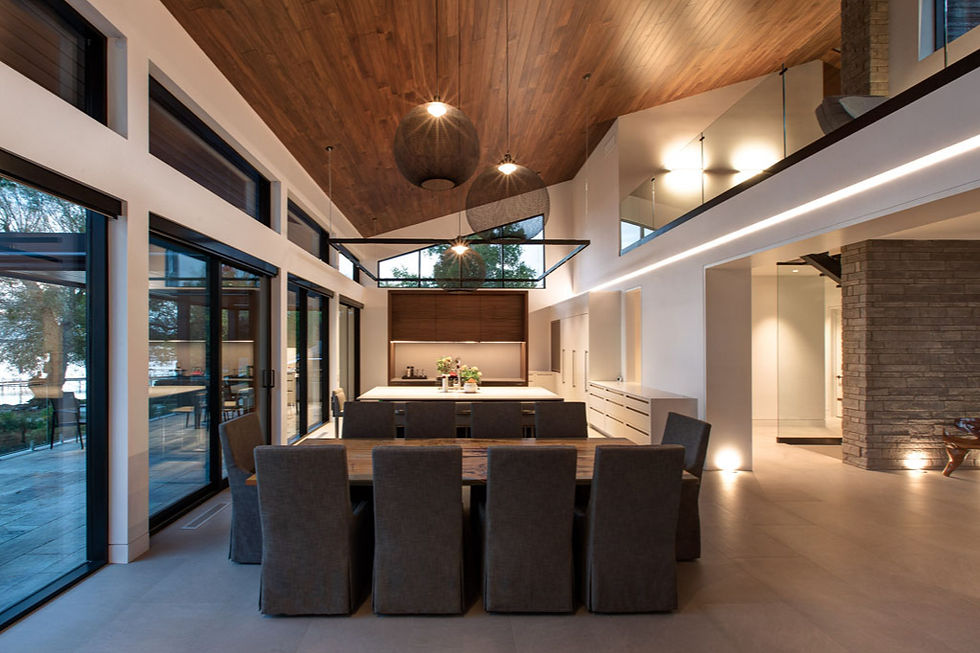
You don't necessarily want every light in the home operating at full brightness.
A lighting scene can provide comfortable illumination around the dining area while keeping surrounding spaces softer and drawing attention to architectural details.
The result feels more intentional and much more inviting for guests.
Relaxing in the Living Room

The lighting that works during the day may not be the lighting you want at night.
Dimming recessed lights and combining them with other layers of illumination can create a warmer, more relaxed environment without leaving the room too dark.
Movie Night

Your home theater or living room doesn't need to go completely dark just because the movie starts.
Subtle lighting can remain around pathways or other areas of the room while the primary lights dim down, making it easier to move around without disrupting the experience.
Starting the Morning

Kitchen and bathroom lighting can provide the focused illumination you need in the morning, while other areas of the home remain softer.
With smart controls, these lighting levels can become part of a scene that activates with a simple command or schedule.
Coming Home

Lighting can also become part of the way your home welcomes you.
A smart home system can activate selected lights when you arrive, illuminate key areas in the evening, or create a predefined scene that adjusts multiple lights at once.
This is where recessed lighting becomes more than a ceiling fixture.
It becomes part of the way your home responds to you.
The Real Value Is in the Design
One of the biggest differences between basic lighting and a premium lighting system isn't necessarily visible in a product specification.
It's the planning behind it.
A beautiful lighting fixture placed in the wrong location can still create a poor result.
Professional lighting design considers the room as a whole:
Where furniture will be positioned
Where people will sit and move
Which architectural features should be highlighted
Where task lighting is needed
How much illumination each area requires
How fixtures should be spaced and aligned
How glare will be controlled
How the lighting will look from different viewpoints
How the lights will be dimmed and controlled
How the lighting will integrate with the rest of the smart home
This is particularly important in new construction and major renovations, where lighting decisions can be incorporated into the architecture before the ceiling is finished.
The objective isn't to install as many recessed lights as possible.
It's to make every fixture earn its place.
Premium Lighting Should Feel Effortless
The irony of great lighting design is that you may not notice the fixtures at all.
You notice that the kitchen feels beautiful at night.
You notice that the artwork has more presence.
You notice that the living room feels comfortable when the lights are dimmed.
You notice that the hallway is illuminated without feeling overly bright.
You notice that your home feels different at different times of the day.
But you don't necessarily think about why.
That's the point.
The best lighting isn't about making a fixture the star of the room. It's about using light to support the architecture, the interior design, and the way you live.
Is Premium Recessed Lighting Right for Your Home?
Basic lighting can provide illumination.
But if you've already invested in thoughtful architecture, quality finishes, custom cabinetry, beautiful furniture, or a smart home system, it makes sense to consider how those elements will look once the sun goes down.
Higher-end recessed lighting gives you more opportunities to shape that experience.
The difference may come from a smaller aperture, better glare control, more precise light distribution, better dimming, a cleaner ceiling appearance, or simply a lighting plan that was designed specifically for your home.
Individually, these details can seem small.
Together, they can change the way an entire space feels.
Create a Lighting Plan Around Your Home
Your home doesn't need more lights just for the sake of having more lights.
It needs the right light, in the right place, at the right intensity, working together with the architecture and the way you use each space.
Whether you're building a new home, renovating an existing property, or looking to elevate the experience of your current space, recessed lighting can be an important part of that transformation.
At ProTech Audio & Video, we look beyond simply installing fixtures. We help homeowners create lighting systems that complement their spaces and integrate naturally with their broader smart home experience.
If you're considering premium recessed lighting for your home, start with a conversation about your space, your lifestyle, and the experience you want to create.
Contact ProTech Audio & Video to explore a professionally designed lighting solution for your home.
Because the difference between ordinary and exceptional isn't always something you can point to.
Sometimes, it's simply the way a room makes you feel.


Comments